Interior Detailing & Car Spa in Dubai: A Complete Guide
By Auto Millennium | AutoCare 360 Vehicle Care Division
Interior detailing goes well beyond a standard vacuum and wipe-down. It's a deep-cleaning and restoration process covering upholstery, carpets, leather, trim, and air systems — addressing the dust, sand, and heat exposure that UAE vehicle interiors face daily. Auto Millennium delivers this through AutoCare 360's car spa services, combining thorough cleaning with material-specific care.
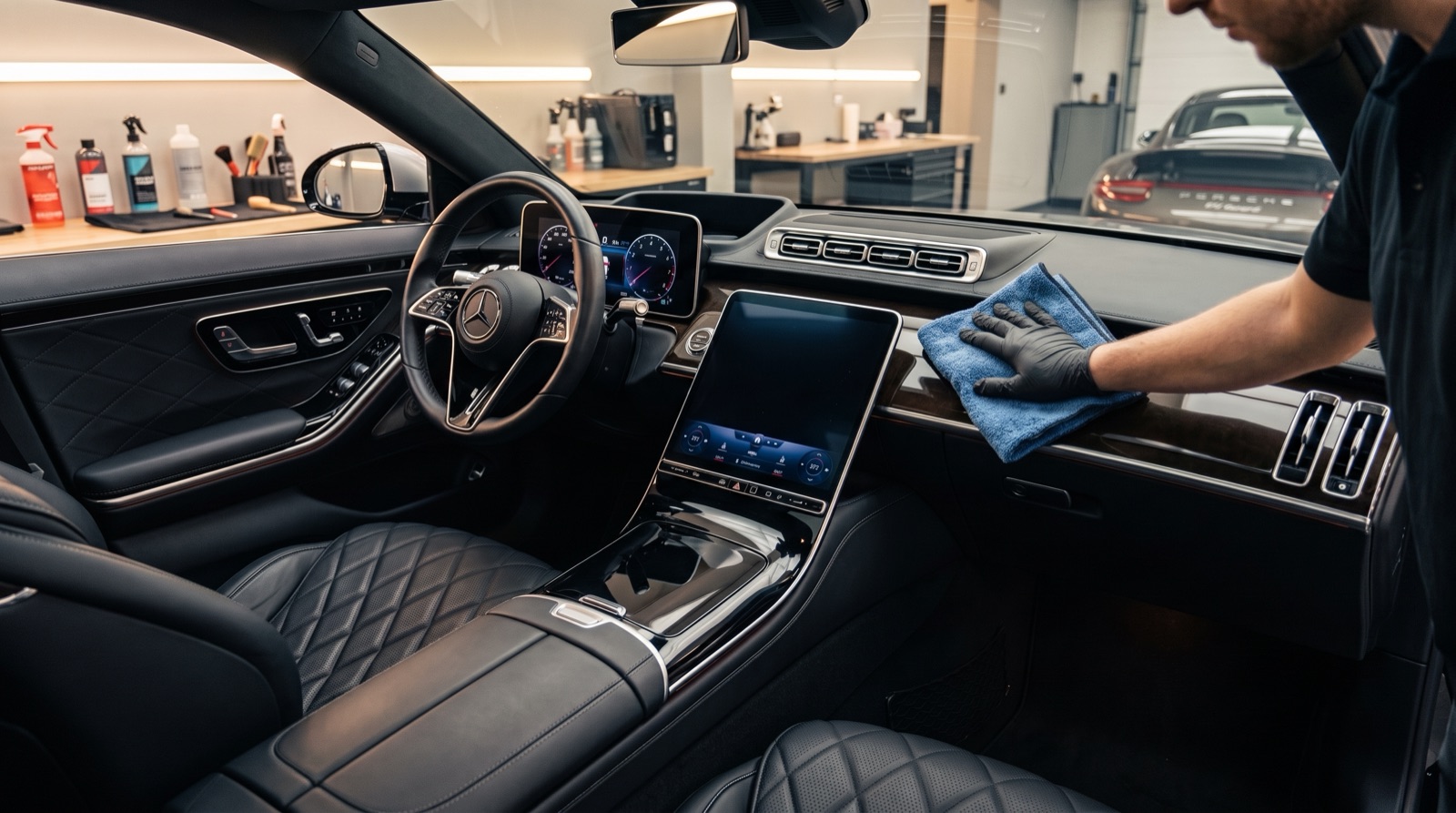
What Interior Detailing Includes
- Deep vacuuming and extraction cleaning: Removing embedded dust and debris from carpets and upholstery, not just surface dirt.
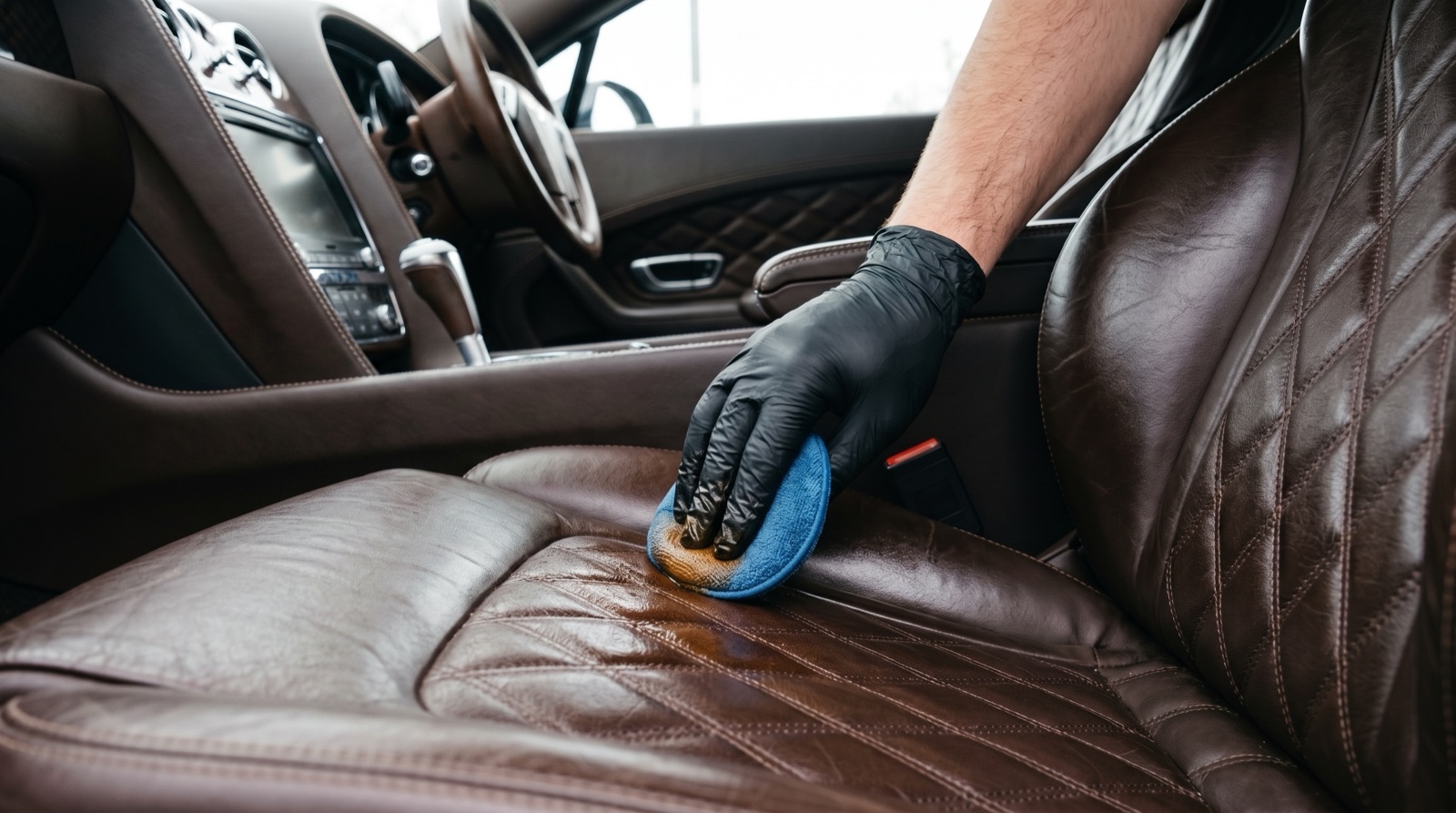
- Leather and upholstery care: Cleaning and conditioning to prevent drying, cracking, or fading.
- Dashboard and trim treatment: UV-protective products applied to reduce sun damage on plastic and trim surfaces.
- Sanitization: Treating high-touch surfaces and air vents to address bacteria, allergens, and odors.
- Glass and mirror cleaning: Streak-free cleaning for interior glass surfaces.
Why It Matters More in the UAE
Sand and dust are a constant presence in the UAE, working their way into carpet fibers, air vents, and seat seams even with regular use. Combined with intense heat and UV exposure — which accelerates leather drying and dashboard fading — vehicle interiors in this climate require more frequent, more thorough care than in milder environments.
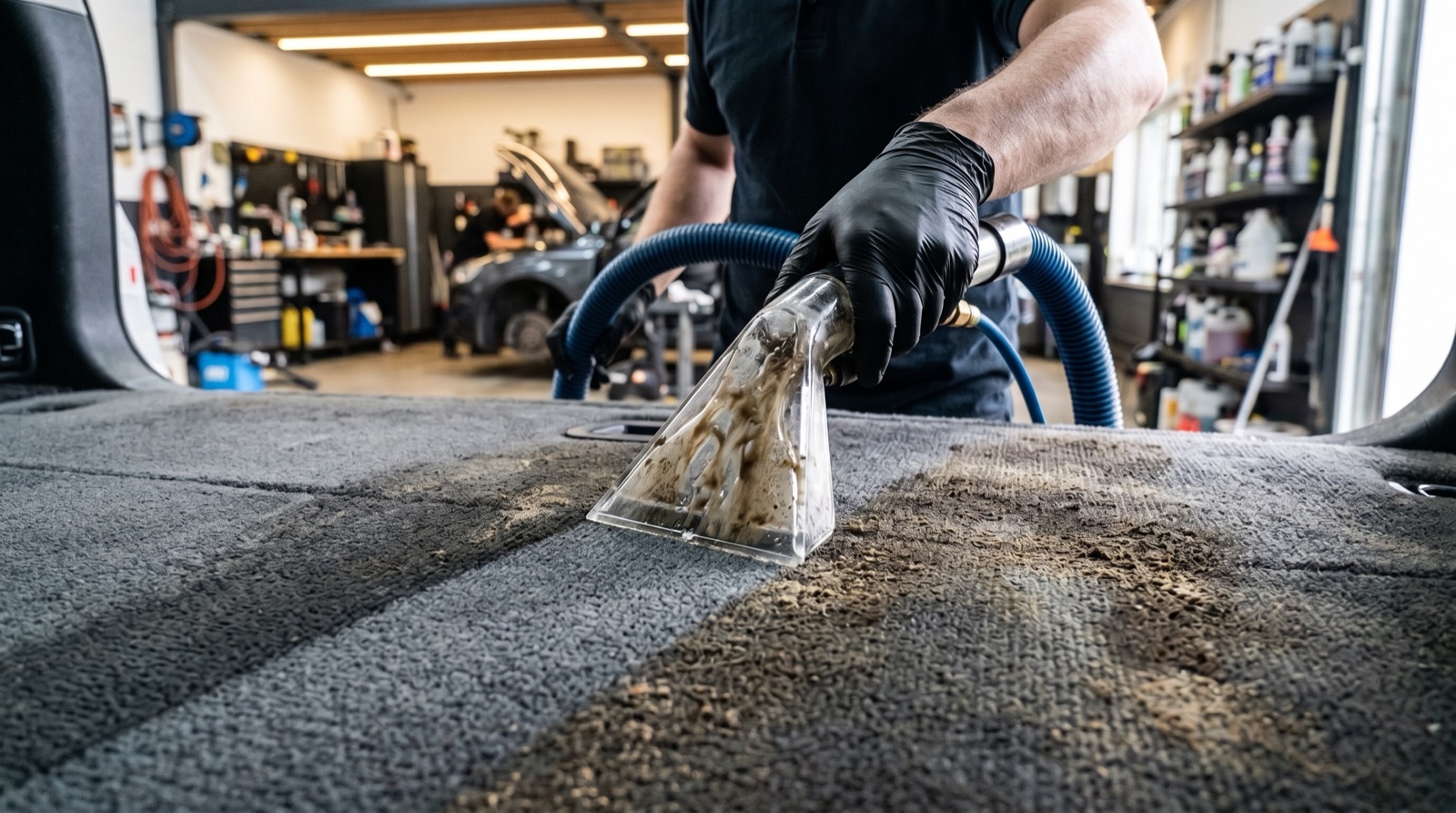
The Interior Detailing Process, Step by Step
- Initial assessment: Identifying material types, stains, and any areas needing extra attention.
- Loose debris removal: Vacuuming and removing surface dust before deeper cleaning begins.
- Deep extraction cleaning: Treating carpets and fabric upholstery to lift embedded dirt.
- Leather cleaning and conditioning: Material-specific products applied to clean and protect leather surfaces.
- Trim and dashboard treatment: UV-protective dressing applied to plastic and trim components.
- Sanitization and final inspection: High-touch surfaces treated, followed by a final walkthrough to confirm quality.
Common Mistakes to Avoid
- Using generic household cleaners: These can damage leather, fade trim, or leave residue not designed for automotive interiors.
- Ignoring odors instead of addressing the source: Fragrance sprays mask smells temporarily rather than resolving the underlying cause.
- Delaying stain treatment: Fresh stains are significantly easier to remove than ones that have set into fabric or leather over time.
- Skipping UV protection on trim: Untreated dashboards and plastic trim fade and crack faster under constant sun exposure.
Detailing Package Comparison
| Service Level | What's Typically Included | Best For |
|---|---|---|
| Standard Interior Clean | Vacuuming, surface wipe-down, glass cleaning | Routine upkeep between deeper details |
| Deep Interior Detail | Extraction cleaning, leather conditioning, trim treatment | Periodic thorough restoration |
| Full Car Spa (Interior + Sanitization) | Deep detail plus full sanitization of surfaces and air vents | Vehicles needing odor removal or hygiene-focused care |
Frequently Asked Questions
How often should a car's interior be professionally detailed?
This depends on usage, but many owners schedule interior detailing every one to three months to manage dust accumulation, prevent stains from setting in, and maintain upholstery condition, particularly in a dusty climate.
What's the difference between interior detailing and a regular car wash?
A regular wash typically covers surface vacuuming and wiping, while interior detailing includes deep extraction cleaning of upholstery and carpets, leather conditioning, dashboard and trim care, and sanitization of high-touch surfaces.
Can interior detailing remove odors from a car?
Yes, in most cases. Deep cleaning of fabric, carpet, and air vents, combined with sanitization treatments, addresses the source of most odors rather than just masking them with fragrance.
Is leather conditioning necessary if the seats look fine?
Yes. Leather can dry out and begin cracking from heat and UV exposure before visible damage appears. Regular conditioning helps prevent this, especially in a hot climate like the UAE's.