Vehicle Wrapping & Branding: A Guide for Owners and Businesses
By Auto Millennium | Car Studio – Creative Vehicle Customization
Vehicle wrapping is a versatile way to change a car's appearance or apply consistent branding across a business fleet — without the permanence or cost of a full repaint. Whether it's a color-change wrap for an individual owner or branded livery across a corporate fleet, Auto Millennium's Car Studio division handles the full process, from design through installation.
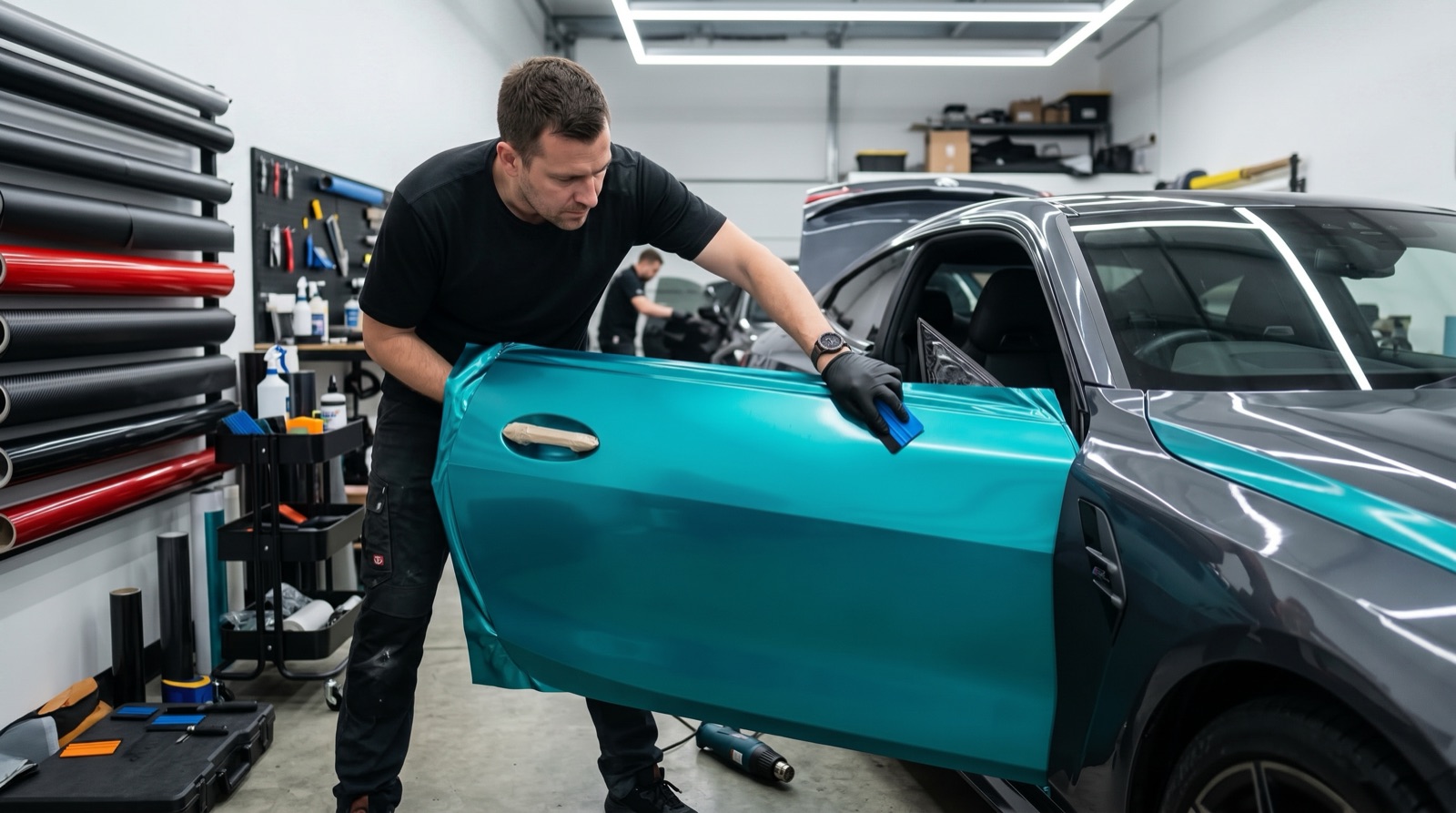
Types of Vehicle Wraps
- Full color-change wraps: Covering the entire vehicle to change its appearance, in gloss, matte, satin, or specialty finishes.
- Partial wraps: Covering select panels or sections for accent styling or a distinctive look.
- Fleet branding wraps: Applying company logos, colors, and messaging consistently across multiple business vehicles.
- Protective wraps: Clear or matte film applied to shield factory paint from UV exposure and minor surface contact.
Why Businesses Use Fleet Branding
For companies operating delivery, service, or corporate fleets, vehicle branding turns every vehicle on the road into a moving advertisement. Unlike static advertising, a well-branded fleet vehicle reaches new audiences constantly as it moves through the city, reinforcing brand recognition at a lower ongoing cost than many other advertising channels.
The Vehicle Wrapping Process, Step by Step
- Design and consultation: For branding projects, this includes logo placement, color matching, and layout planning across the vehicle's panels.
- Surface preparation: The vehicle is thoroughly washed and decontaminated so the vinyl adheres properly, without trapping dirt underneath.
- Panel removal (where needed): Mirrors, handles, and trim pieces are removed for a cleaner, more precise wrap installation.
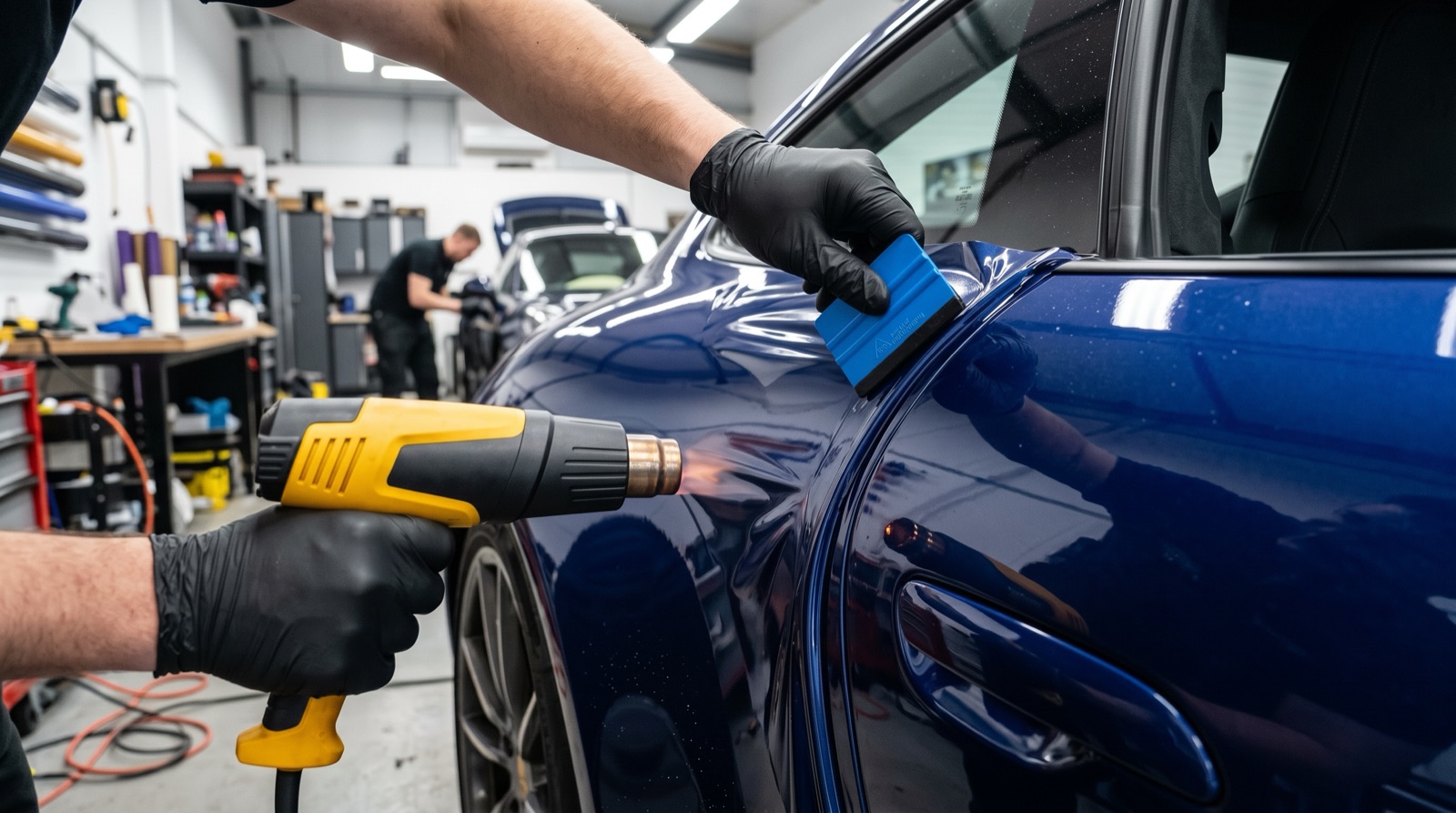
- Vinyl application: The wrap is applied panel by panel, using heat to help the material conform to curves and contours.
- Trimming and edge finishing: Excess vinyl is trimmed precisely along edges, seams, and panel gaps.
- Final inspection: The completed wrap is reviewed for bubbles, lifting edges, or alignment issues before the vehicle is returned.
Common Mistakes to Avoid
- Wrapping a vehicle with existing paint damage: Wrapping over chips, rust, or unresolved paint issues can trap or worsen the underlying problem.
- Choosing low-grade vinyl to save cost: Cheaper film is more prone to fading, cracking, and lifting, especially under UAE sun exposure.
- Inconsistent branding across a fleet: Variations in color matching or logo placement between vehicles can weaken brand consistency.
- Improper washing after installation: Automatic brush washes can lift wrap edges; hand washing is generally recommended for wrapped vehicles.
Wrap Type Comparison
| Wrap Type | Purpose | Typical Lifespan |
|---|---|---|
| Full Color-Change Wrap | Complete aesthetic transformation | 3–5 years |
| Partial/Accent Wrap | Targeted styling on select panels | 3–5 years |
| Fleet Branding Wrap | Consistent business identity across vehicles | 3–5 years, often refreshed with campaigns |
| Protective Clear Wrap | UV and surface protection for factory paint | 5+ years |
Frequently Asked Questions
Does vehicle wrapping damage the original paint?
No, when installed and removed correctly by a professional. A quality vinyl wrap actually protects the factory paint underneath from UV exposure and minor surface contact during the time it's applied.
How long does a vehicle wrap last?
A professionally installed wrap using quality vinyl typically lasts three to five years, depending on the film grade, exposure to sun and weather, and how the vehicle is maintained.
Can a wrap be removed to reveal the original paint?
Yes. A properly installed wrap can be removed by a professional without damaging the paint underneath, provided the original paint was in good condition before wrapping.
Is fleet branding with vinyl wraps cost-effective for businesses?
Vinyl wraps are generally considered a cost-effective way to apply consistent branding across a fleet, since they can be updated or removed without repainting, and they double as mobile advertising while vehicles are on the road.